
Do you use AI?
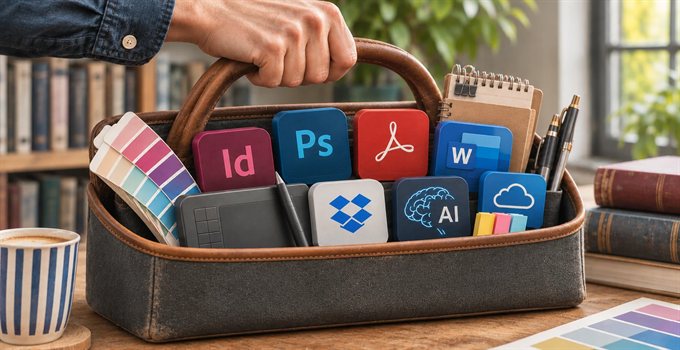
We've always been a technology-led business at Wordzworth. Over the past 20 years, we've built up a huge toolbox of software to help our little team produce thousands of high-quality books, quickly and at prices our customers can afford. AI is the latest addition to that toolbox, so of course we're keen to explore the ways it can improve our work.
But using AI and using it well are two very different things. Years of experience mean our designers know what to ask for, what sort of result to expect and, crucially, when to question the answers. Even then, with the clearest instructions, AI can still get things badly wrong. That's why we're careful about where we use AI, with our designers remaining fully in charge. But when it comes to quality checking, AI takes things to a whole new level.
Your words stay your words
There are plenty of things to sort out when getting a book ready for typesetting, from extra spaces and tabs to odd characters, quotation marks, dashes and other small issues that can crop up in a Word file. But as important as those details are, it's even more important not to change something the author intended.
AI can be very useful for spotting potential errors, but it takes an experienced designer to know what, if anything, needs correcting. A character might use broken grammar on purpose, or a strange bit of punctuation might be there for a reason. Something that looks wrong isn't always a mistake, and even a tiny tweak can completely change the meaning of what's written. So we use AI to flag possible problems, but our designers make any changes.
People make the design decisions
Our role isn't simply to follow instructions. It's to understand what each author is trying to achieve and find the best way to make it happen. Having worked on thousands of books, we know what questions to ask, what works for different genres and the practical issues involved in getting a book into print. You might ask for a particular layout, but if we can see that a different approach would make the book easier to read or work better in print, we'll absolutely say so. We'll explain why and help you decide what's right for your book.
That same knowledge matters when it comes to producing the finished book. AI has opened up some fantastic possibilities for trying out design ideas quickly, particularly for covers, and creating artwork that might once have been far too costly. But it takes an experienced designer to bring everything together, using Adobe InDesign to create the final covers and carefully lay out every page, ready for print. We explain more in Can AI format my book?
Taking quality checking further
Checking a book takes a great deal of care. Imagine going through hundreds of pages looking for every little thing that might be wrong. A heading that's lost its italics, a caption that suddenly changes style or a running header showing the wrong chapter. There's so much to keep track of, and even the most experienced designer can miss something.
This is where AI really comes into its own. After our designers have finished their checks, we use AI for one final pass. In minutes, AI examines hundreds of pages, compares details throughout the book and spots errors that even hours of careful checking might miss. We're now catching problems that would previously have slipped through, giving us more confidence in the quality of our finished books than ever.
Making good use of AI
Producing the best books we can has always been our focus. AI is already making a big difference to our quality checking, so of course we're keen to see what else it can do. But however powerful AI becomes, getting the best out of it takes real experience and judgment. That's what our designers bring to every book. And whatever tools we use, your book will always be in their hands.