
Can AI do my book layout for print?
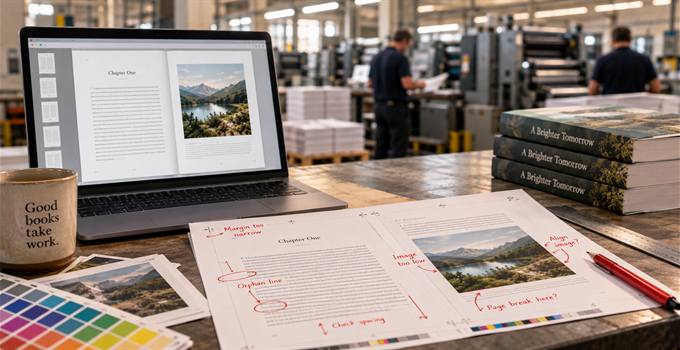
The short answer is that AI can certainly help with book layout, but on its own it cannot yet reliably prepare a book for professional printing. AI tools can produce pages that look remarkably like a finished book on screen, but print brings a lot more to think about: margins, paper, binding, color, page count and what the printer needs. All of it shapes how the finished book looks, feels, reads and costs to make.
Laying out pages and preparing a book properly for print are not quite the same job. The first is more and more automated. The second still leans on knowing how books are physically made. The real question is not whether AI can make a file, but whether that file becomes the book you pictured when it reaches the press.
A book can look right on screen and still be wrong in print
A screen can only tell you so much. Margins that look generous can feel tight once part of the page sits toward the spine. Images that look sharp on screen can print soft at their real size. Covers need a little room to allow for the way they are trimmed. The layout has to work not just as a PDF, but as ink on paper in a bound and trimmed book.
A print file has to suit the printer making it
There is no one set of rules for every printed book. Page size, bleed, spine width and image quality all depend on the printer, the binding and the paper. These choices affect one another too. Change the paper or the page count and the spine may change. Change the format and the margins, images and type may need to shift. Knowing how the book will be made helps shape the layout from the start.
Passing preflight does not mean the design will work
Before a book reaches the press, its files are checked for technical problems: fonts, image resolution, page size, bleed. Printers run many of these checks automatically, and AI is getting better at them too. But passing preflight only tells you the file is technically fit to print. It cannot tell you whether the type will be comfortable to read, whether the inner margin will feel right once the book is bound, or whether the design suits the paper. A technically perfect file can still make a disappointing book.
AI can make suggestions, but experience adds context
Modern AI can suggest options, question your choices and explain a lot of the thinking behind book design and printing. We use AI ourselves, so we know how useful it can be. What experience adds is a feel for which decisions will actually matter in the finished book. A particular size may not suit the market, a high page count may make the book cost more than it should, or a font that looks lovely on screen may not work as well in print. Often the most useful advice is something the author did not know they needed to ask.
Paper, ink and binding change the way a book works
Books are physical objects, so their materials shape their design. Binding changes how a book opens: a casebound hardback will not lie flat, so it is the wrong choice for a recipe book you need to keep open, and forcing it flat can crack the glue. Stitched bindings are made from folded sheets, so their pages come in fixed batches, while perfect binding uses single leaves, which is cheaper and lets you land on any page count. Paper thickness changes the bulk and the spine, and thinner paper lets more of the print show through. Color behaves differently on paper than on a bright screen: a dark background can print as a muddy black instead of a crisp one, and small white text on top of it can fill in and blur. None of this has to be complicated for the author, but it does need thinking about before the book goes to print.
The size and cost of the book can change the right design
A long manuscript may fit into one volume on paper, but make a book that is clumsy to hold or costly to print, and then two volumes make more sense. Sometimes it is better to trim the page count instead. Size matters in smaller ways too: a pocketbook printed a shade too big for an actual pocket is a classic mistake, one you only spot when the first box arrives. Cost sits underneath all of it. Format, type, paper, color, binding and finish all feed into what a book costs to make. Designing a book means weighing how it looks and reads against what it costs and how practical it is to make.
Experience of how books are actually made
Lightning Source is one of the printers we work with, and we have visited the factory, watched thousands of books and covers come off the line and talked to the people running it about the problems they run into. AI can know a great deal about printing, but knowing the theory is not quite the same as having seen how books are really made.
So, can AI do your book layout for print?
AI can already do a surprising amount, and it is improving quickly. It can help build layouts, suggest fonts, shape the structure, spot inconsistencies and run technical checks. Some of what it cannot do today may change over time, and we already use AI ourselves where it makes our work quicker or better.
For now, though, there are still two questions. Is the file technically right for the printer, and will the choices inside it make a book that looks and feels right when it is printed? AI and automated preflight tools are getting good at the first. The second still leans on real experience of books and printing.
That is why we see AI as a useful tool in making a book, not a replacement for the whole job. Whether you are looking at our print-only book services or our book publishing services, our job is to make sure that what comes off the press is the book you pictured, rather than something you wish you had changed once the box arrives.